
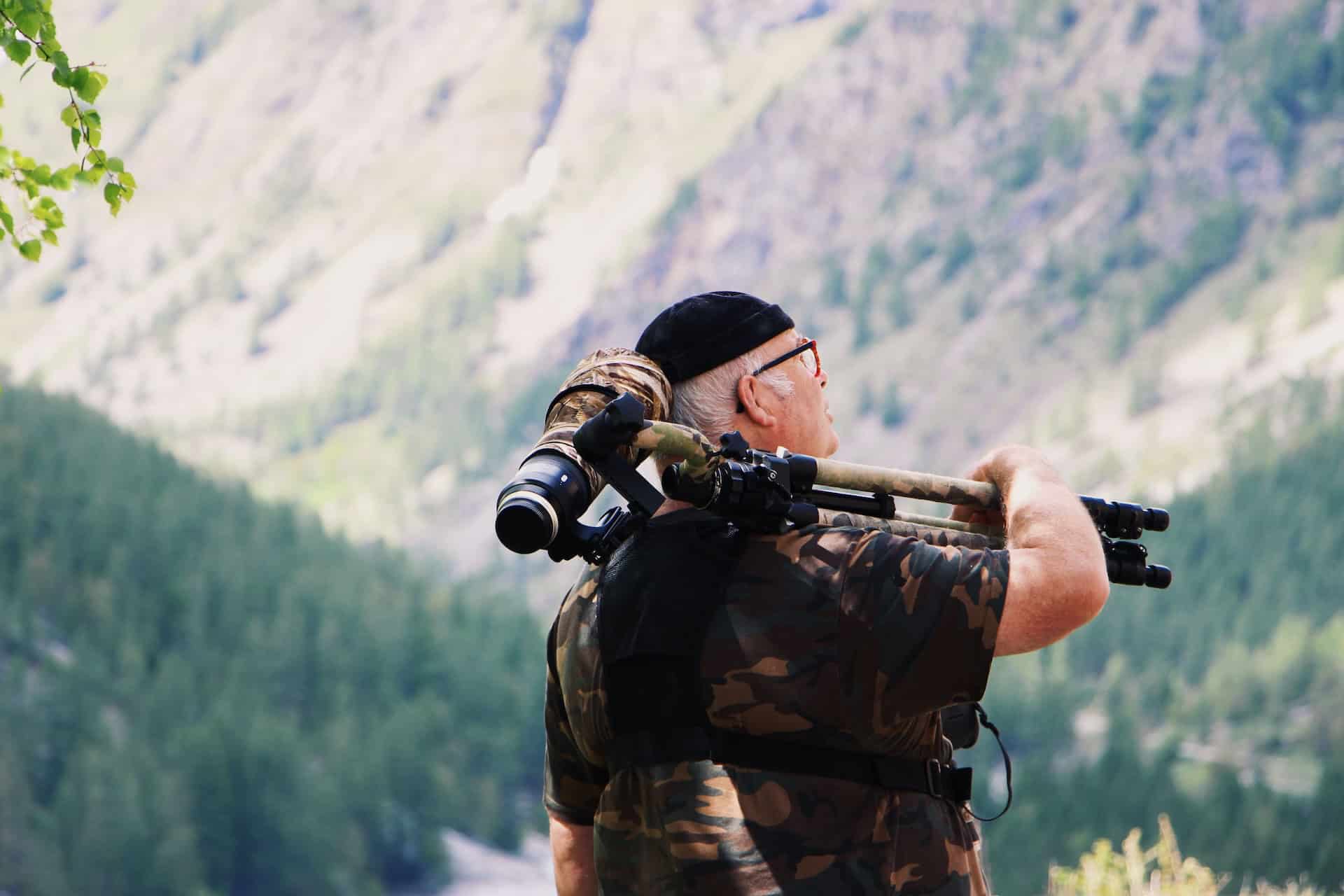
Photographs and videos can greatly improve public understanding of large carnivores and their conservation. However, approaching animals for better footage, repeatedly following them, using artificial lighting, or operating drones nearby can disturb wildlife and may increase the risk of a negative encounter. Media professionals should prioritize animal welfare, human safety, and applicable wildlife regulations over obtaining dramatic images.
The presence of cameras can also influence animal behavior. A carnivore that is repeatedly approached may change its movements, abandon a resting location, or become stressed. Females with young and animals at feeding or denning sites can be particularly sensitive to disturbance.
Professional filming should therefore be planned in advance whenever possible and carried out using appropriate distances, equipment, and permissions.
Keep a safe and respectful distance
Never approach a large carnivore simply to obtain a closer photograph or video. If an animal changes its behaviour because of the presence of the photographer or film crew, this can be a sign that the distance is too small or the activity is causing disturbance.
Where possible:
- use telephoto lenses rather than approaching animals;
- avoid blocking an animal’s escape route;
- never surround or corner an animal;
- do not follow an animal;
- avoid approaching dens, resting sites, or females with young;
- minimise noise and sudden movement;
- avoid using artificial lighting unless specifically justified and permitted;
- do not encourage an animal to approach people or vehicles for footage;
- follow instructions from wildlife authorities and protected-area staff.
Drone use requires particular caution. Drones can disturb wildlife through noise and close aerial movement, and some species may react strongly to them. Their use may also be restricted or prohibited in protected areas or under national or local regulations. Operators should obtain all required permissions and follow established minimum distances and operating conditions.
Media professionals should also consider the behaviour that their footage may encourage in the audience. Images showing people standing very close to wild carnivores can unintentionally suggest that such behaviour is safe or acceptable. Captions should make clear when footage was obtained under controlled conditions or from an authorised distance.
If filming an active conflict situation, the priority should be people’s safety and avoidance of additional disturbance, not obtaining footage at any cost. A dramatic image is never more important than the welfare of people or wildlife.